
Susanna Huang is a 4th-year biochemistry major studying the design and synthesis of potent antiprostate cancer agents with Prof. Oyelere.
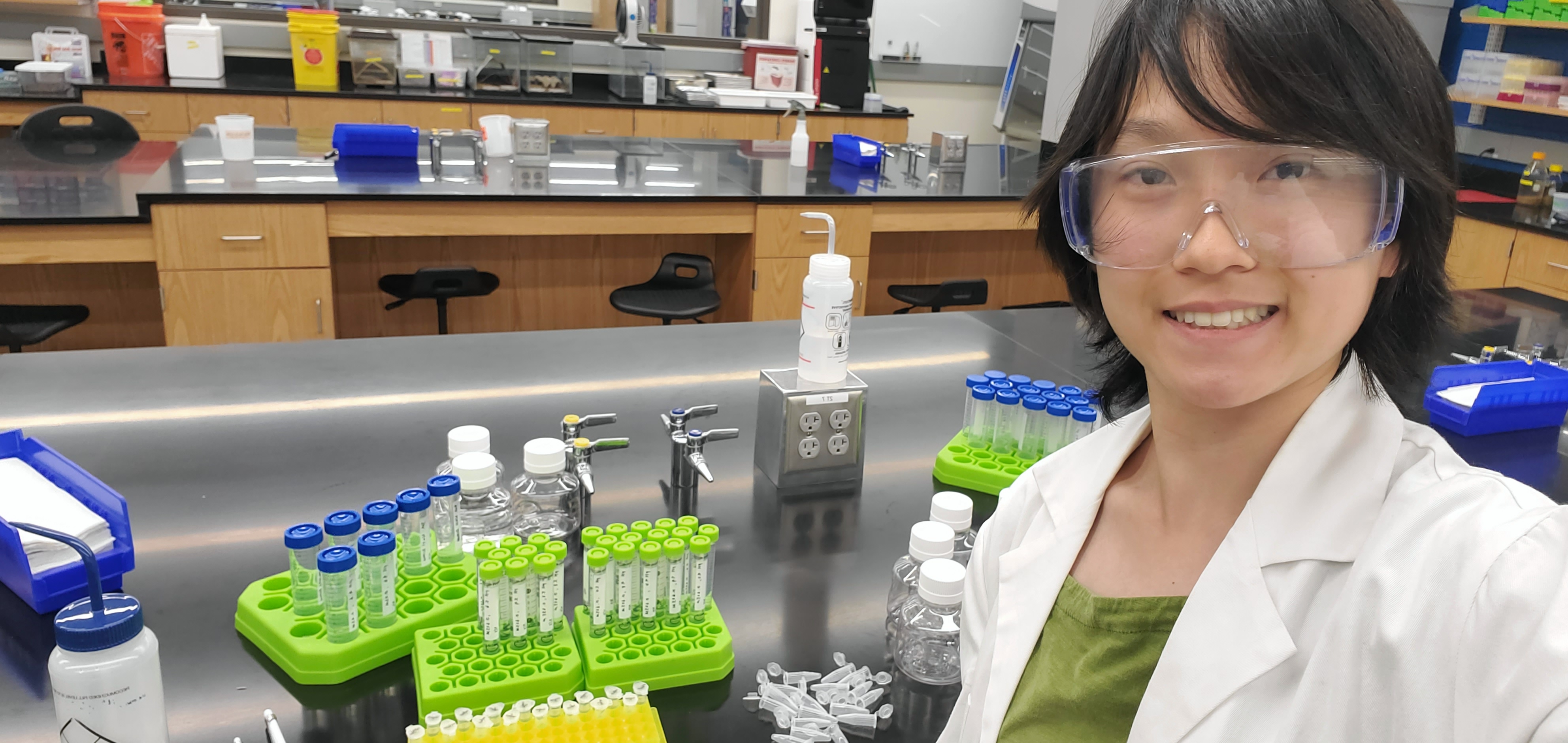
How long have you been an undergraduate researcher at Georgia Tech?
I have been an undergraduate researcher at Georgia Tech since my first semester here. I joined the Oyelere Lab and have been here since. In the summer of 2024, I also diversified my experience by doing crystallography work at the Lawerence Berkeley National Laboratory as a Student Undergraduate Laboratory Internship (SULI) intern.
How did you get involved with undergraduate research?
Since high school I had wanted to do wet-lab research, so when I received an interview and later position to work on a anticancer project to design and develop therapeutic compounds for the Oyelere Lab, I was ecstatic and immediately agreed.
What are you working on?
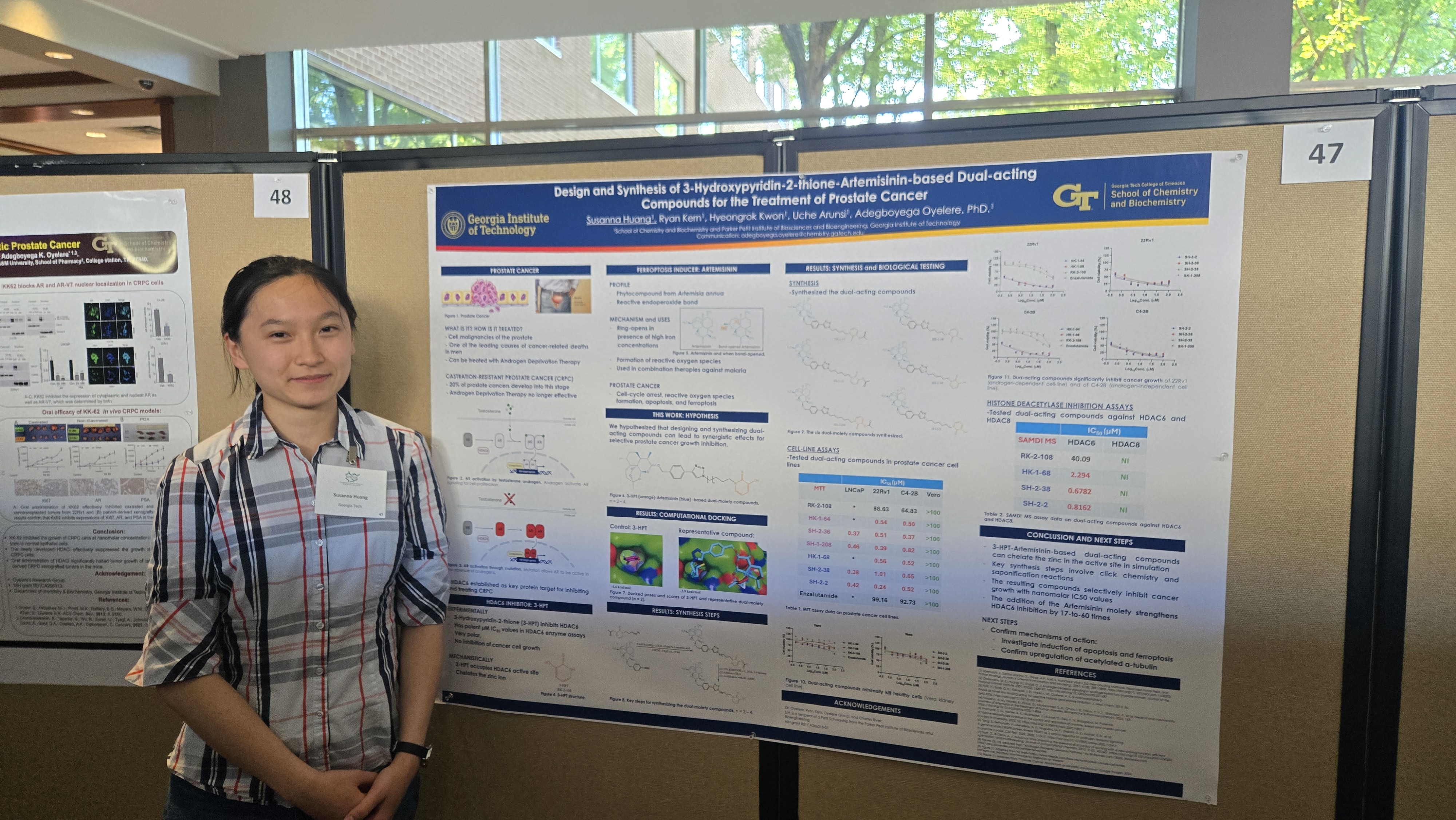
I am working on the design and synthesis of dual-acting compounds for the treatment of prostate cancer. The compound 3-hydroxypyridin-2-thione (3-HPT) is a potent inhibitor of HDAC6, a protein target for treating prostate cancer. When I realized that artemisinin, a common malarial treatment, could cause cell cycle arrest, apoptosis, as well as reactive oxygen species (ROS) generation and ferroptosis in prostate cancer cells, I was very excited. Synthesizing compounds containing both the artemisinin and the 3-HPT moieties could lead to synergistic anti-prostate cancer effects, significantly increasing the potency of the compounds, without the pharmacokinetic uncertainties from a combination therapy of the two moieties separately. What I found especially interesting was that as cancer cells became more aggressive, their intracellular iron content increased, which made them more vulnerable to ROS and lipid peroxidation, leading to artemisinin’s selective cancer cytotoxicity.
After overcoming hurdles and troubleshooting reactions and finally synthesizing the full set of dual-acting compounds, I was excited when I saw that the compounds had a 60- to 180-fold increase in cytotoxicity against prostate cancer cells compared to both 3-HPT and enzalutamide (an on-market prostate cancer therapeutic) without killing the healthy cells! When I saw these results, I was so surprised and excited that my compounds had such potency and selectivity. I shared my research on this project as an oral presentation at the Southeast Regional Meeting of the ACS (SERMACS) conference and as a poster presentation at the Southeastern Chemical Biology and Drug Discovery Symposium. I have prepared the manuscript, and I will be the first author on this paper in preparation.
What is your favorite thing about research/researching?
My most favorite thing about doing research is sharing the research with other people at conferences. It gives me the opportunity to share with others recent progress and also hear from them their insights and suggestions on how to further propel the project forward. These types of dialogs at the American Crystallographic Association conference have allowed me to make new connections with corporations and fellow conference attendees to share the message about crystallography scientific outreach to students and to raise over $1,400 last summer to power additional crystallography workshops and outreach events I organized for students.
What are your future plans and how has research influenced them?
To strengthen my nucleic acid crystallization skills and develop nucleic acid-based therapeutics to treat diseases, I have accepted a post-baccalaureate position in the Szostak Lab, HHMI & University of Chicago, to work on nucleic acid crystallography projects in the context of the origins of life studies. Prof. Szostak has immense crystallography resources and expertise that I can access. I am confident that the skills I learn there are translatable for my mechanistic and structural studies for my therapeutic projects in the future.
I additionally am applying for PhD applications right now, and I hope to join a structural biology research laboratory that works on nucleic acid-based structure determination and mechanism elucidation so that I can master a full suite of structural biology skills to use for my own future nucleic acid-based therapeutic investigations.
My research experience at Georgia Tech has allowed me to develop my own project investigation and execution skills, and these experiences have solidified my desire to obtain a PhD and later work as a research faculty, running my own research lab, mentoring students, and developing therapeutics to treat diseases.
What advice do you have for students who want to be undergraduate researchers?
My advice to undergraduate students is this: Start asking about research opportunities early and often, but only accept a research position if you decide you are truly interested and invested in the research project. Once you accept the project, don’t just do the hands-on wet-lab work, also be sure to read the necessary background literature to understand the context of your work and understand the inside and outside of your project. I have seen many other undergraduate students who join a really great undergraduate research project but then later become demotivated and leave the lab. This usually only happens when they did not have the opportunity to understand the theory of what they were doing. To ensure that you are confident in what you are doing and actually look forward to the investigations and experiments for the project, be sure to understand the background significance, the theory, and the anticipated results. That way, when you obtain your results, you will be able to know how to interpret them, which will inform you on the next steps you should take to propel your project forward. Additionally, feel free to ask your graduate student/post-doc mentor as well as your PI mentor to review your presentation or report material. They can provide very valuable and detailed feedback for you so that you can improve the quality of your work.
Finally, sign up for conference presentations as often as you can. PhD application review committees will want to see that you not only have experience doing research but also summarizing and presenting your work at conferences.